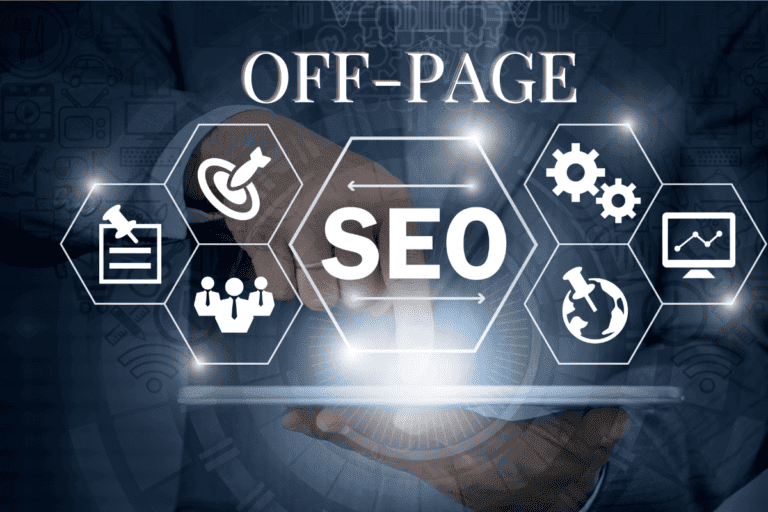
Off-Page SEO (also known as off-site SEO) encompasses actions taken outside of your own website to impact your rankings within search engine results pages (SERPs). This includes strategies like link building, social media marketing, and managing local listings. These marketing efforts are crucial for improving your site’s perception of the internet, which can lead to higher search rankings and increased traffic.
What is off-page SEO? While off-page search engine optimization might seem complex, it’s a powerful aspect of your overall SEO strategy. It’s about enhancing how others perceive your website across the web. A robust off-page presence tells search engines that your site is authoritative and valuable, which is important for attracting more visitors.
This guide will unpack the various components of Off-Page SEO, explaining why they’re important and how they differ from on-page SEO. We’ll also offer practical steps you can take to bolster your website’s off-page optimization. By the end of this guide, you’ll be ready to extend your site’s reach far beyond its own pages.
What Is Off-Page SEO?
Off-page SEO is all about the activities you do outside of your website to improve SEO and local SEO ranking factors on search engines, like Google. It’s different from On-page SEO, which focuses on the content, keywords, and setup of your site itself. Off-page SEO, on the other hand, is about how the online world interacts with and values your website.
Links to your website from other sites are a big part of off-page SEO. When another site links back to you, it’s like a vote of confidence, signaling to search engines that your content is valuable. Social media shares, mentions, and even online reviews can also play a role in boosting your off-page SEO.
In essence, off-page SEO factors help search engines understand how trustworthy and authoritative your site is in the eyes of the online community. The more trust you build, the better chance your website has of ranking higher in search results.
How To Use Off-Page SEO Techniques?
Starting with off-page SEO involves several important activities. One of the most effective off-page SEO strategies is building links. This means encouraging other websites to link to your site, which helps build your site’s reputation.
Another technique is blogging. By creating consistent and high-quality content, you can attract more visitors and backlinks to your website. Pair this with social media content marketing by promoting your content on platforms like Facebook or Twitter to boost its reach.

Also, influencer marketing involves collaborating with influential people to promote your content through videos. Writing for publications in your field can also expand your reach and domain authority. Lastly, social bookmarking on sites like Pinterest or Reddit can help your content get more visibility and traffic to your site.
Why Is Off-Page SEO Important?
Off-page SEO plays a crucial role in how search engines evaluate websites. When other websites link to yours or when your content gets shared widely, search engines see your site as valuable and reliable. This positive external recognition boosts your site’s credibility.
A key benefit of off-page SEO is that it improves your search engine rankings. Higher rankings mean your website appears closer to the top when people search for relevant topics. As a result, more people are likely to visit your site, increasing its visibility and reach.
Furthermore, you must improve off-page SEO techniques to strengthen your website’s authority in your field. When other reputable sites and individuals engage with or promote your content, it establishes your website as a go-to resource, building trust with both search engines and your audience.
How Does Off-Page Differ From On-Page SEO?
When we think about SEO, it’s useful to see it in two main parts: on-page SEO and off-page SEO. On-page SEO focuses on what’s directly within your website’s control. This includes things like your content, how it’s organized, and how your site is set up.
Off-page SEO, on the other hand, involves actions outside of your website. It’s about how other websites, users, and online platforms perceive and engage with your site. Think of activities like getting links from other sites or how often you share your content on social media platforms.
In simple terms, on-page optimization is about optimizing your own website to be the best it can be. Off-page SEO is about building relationships and trust outside of your website. Both are crucial for ensuring your site is recognized and valued on the internet.
Important Off-Page SEO Factors to Consider
- Evaluate your backlink profile to understand who’s linking to you.
- Check your competitors’ backlink profiles for insights into their SEO strategy.
- Improve your internal linking to ensure cohesive site navigation.
- Fix your 404 errors to avoid losing valuable traffic.
- Optimize your site’s on-page SEO to support your off-page efforts.
- Utilize broken link building to capture links lost by competitors.
- Engage in outreach to increase your content’s visibility.
- Update your local citation and directory profiles for accuracy.
- Promote your content with paid ads to target specific audiences.
- Share your expertise through guest posts or blogging on other sites.
- Regularly post your content on social media for greater engagement.
When you evaluate your backlink profile, you’re looking at who thinks your site is important enough to link to. This can show you what you’re doing well and where you can improve. Checking competitors’ backlink profiles gives you insight into how other therapists are building their online presence and may reveal new opportunities for you.
Improving internal linking helps visitors navigate your site more easily, which keeps them engaged longer. If visitors encounter 404 errors, they might leave your site, so fixing these is crucial. And remember, while on-page SEO isn’t off-page, it lays the groundwork for a good reputation with both visitors and search engines.
Looking at link building options means finding ways to get more websites to point to yours. With broken link building, you help others fix their site while you get a new link. Outreach is about making connections; you might share your content or ask others to share it. Keeping your local citations and directory profiles up-to-date helps people find you more easily.
Paid ads can be a quick way to tell more people about your great content. Meanwhile, guest blogging lets you reach new audiences on other sites. And don’t forget about social media—it’s a powerful way to engage with people and draw attention to your website.
This checklist is a start. Use it to build a plan that fits your unique practice and online goals. Keep it simple, clear, and focused on building trust and reputation online, just like you do with your clients in therapy.
Final Thoughts
Off-page SEO matters, much like our work in therapy, which is about building and nurturing relationships. It’s the external support system for our websites, highlighting our content’s worth and increasing our online trustworthiness. Remember, while the content on our site is important, how the world perceives and interacts with that content is equally crucial.
Navigating the SEO world can feel overwhelming, but with the right strategies, the journey becomes smoother. Continue to engage in best practices, stay updated with changing trends, and remain patient. The fruits of diligent off-page SEO work are well worth the effort, bringing visibility and connections that enrich our online endeavors.